
21.04.2026
Most MSP (Managed Service Provider) programmes are built on one core strength: visibility. They show you who is working for you, what they cost, which supplier delivered them, and whether they are compliant.
For the contingent workforce inside the programme, that visibility is typically strong, enabling better cost control, clearer governance and more confident decision-making. But in many organisations, that visibility stops at the exact point where it becomes most valuable.
Because just outside the MSP sits a growing, high-value category of external talent spend that the programme cannot properly see. Consultancy and Statement of Work engagements, procured differently, managed separately and reported elsewhere.
That creates a problem.
At Morson Edge, we spend a lot of time inside MSP environments, working closely with programme leaders, procurement and talent teams. What we see is not broken programmes. But programmes operating on incomplete information.
From my perspective as a Sales Director at Morson Edge, this is something we see play out every day, with strong MSP programmes making decisions based on partial data, workforce strategies built on incomplete visibility, and costs that appear controlled on the surface but behave very differently underneath.
The reality is simple: many programmes are performing well, but they are only telling part of the story.
The edge of the programme
Modern MSP programmes are far more capable than they used to be. The best programmes now offer sophisticated visibility into supplier performance, rate benchmarking, worker compliance, and workforce planning data. They have moved well beyond administration into genuine strategic territory.
But the category perimeter matters. SOW and professional services spend, in most organisations, sits outside the Vendor Management System. It is procured separately, tracked separately, and reported separately. From where the programme management team sits, it is largely dark.
The scale of that darkness has grown substantially. According to Staffing Industry Analysts’ 2025 data, SOW now represents 39% of all MSP spend under management for those programmes that have extended their scope to include it. For programmes that have not made that extension, the equivalent spend is flowing through procurement channels with no programme-level oversight.
This is not an abstract data problem. It has direct operational consequences for how you manage talent supply.
The talent supply problem: decisions made on partial data
The purpose of any MSP programme is simple: to give the organisation reliable, cost-effective and compliant access to external talent. At its core, it should answer a simple question. Do we have the talent we need, when we need it, at the right cost and level of risk?
When consultancy and SOW sit outside the programme, that question becomes much harder to answer. Because the data is incomplete, and critically, the gaps tend to sit in the highest-value, highest-impact areas of external spend.
From a programme perspective, the impact is immediate. Workforce capacity appears smaller than it really is, skills mapping misses expertise already in place, supplier performance is assessed in isolation, and cost comparisons lose context across different engagement routes. Compliance is tightly managed in one channel, and far less visible in another.
The result is decision-making based on a partial view. Programme teams may have clear visibility of contractor numbers, but little insight into consultants delivering parallel workstreams. Suppliers can be deeply embedded through SOW delivery, yet appear underutilised in programme data. And critical skills already inside the business are often overlooked simply because they sit behind a different contract structure.
Across the sectors we support at Morson Edge, the issue occurs consistently. Organisations have strong visibility over one part of their external workforce, and very limited visibility over the rest.
Where the gap is widest: technology spend
If there is one area where this challenge shows up most clearly, it is technology.
Across corporate functions, SOW spend is no longer just about consultancy. It is increasingly tied to digital delivery, from system implementations to AI, automation and infrastructure projects. These structured agreements give organisations speed and control, but they also sit outside traditional workforce visibility.
At the same time, talent shortages remain high. The CIPS Procurement and Supply Salary Guide 2025 points to 58% of UK hiring managers struggling to find procurement talent, with around 80% of UK employers experiencing difficulty filling vacancies.
In that environment, organisations turn to consultancy and SOW engagements to fill capability gaps quickly. The problem is visibility. These engagements are approved and delivered at pace, but rarely tracked as part of the wider workforce strategy.
Through my work, I see the same pattern repeatedly. External expertise is brought in to solve a problem, spend is signed off, but the programme team never sees it.
The talent is there. The demand is real. It just sits outside the MSP.
And that is where things start to break. When critical technology talent sits beyond programme visibility, the MSP becomes a partial view, not the full workforce picture.
What visibility really unlocks
The case for extending programme visibility to include SOW is not just about cost, although the cost impact is real. Research indicates rate premiums of up to 70% where contingent workers are engaged via SOW rather than through a managed programme, which becomes material at scale.
But the stronger argument is what better visibility unlocks in terms of capability.
Supplier performance across the full external workforce
If a supplier is delivering both contingent workers and SOW resources, most programmes only see part of that performance. Extending visibility allows organisations to assess suppliers based on total delivery, value and risk, rather than fragmented data.
Skills mapping that covers the whole external talent pool
Skills-based hiring is becoming central to MSP design. SIA’s Talent Platform Update 2025 identifies this as a major trend, with organisations increasingly tracking which skills perform well across projects, suppliers, and roles.
If your skills data only reflects contingent labour, it is only telling part of the story.
Bringing SOW into scope means:
- Mapping skills across the entire external workforce
- Understanding which capabilities drive outcomes
- Identifying where expertise already exists
Without that, workforce planning is guesswork dressed up as strategy.
Workforce planning conversations with real numbers
As reliance on external talent grows, planning needs to be grounded in a clear understanding of who is working, what they are delivering, and where future gaps will emerge. If SOW sits outside the programme, that baseline is incomplete, leading to reactive hiring and missed opportunities to optimise supply.
Compliance management across the full risk surface
Compliance risk does not sit neatly within one engagement model. IR35 and other risks apply across all forms of external talent. Extending visibility brings SOW into a managed environment, where risk can be assessed and addressed proactively rather than identified after the fact.
What change looks like in practice
The question I am asked most often is simple: how do you extend visibility to SOW without creating friction across procurement and the business?
It starts with alignment. Programme teams, procurement and business functions need a shared understanding of why this matters, and how greater visibility benefits everyone, not just the MSP.
From there, organisations typically begin with a straightforward audit. What are we actually spending on consultancy and SOW? Who are the suppliers, where are they operating, and what work are they delivering? The answers often reveal duplicated supply, inconsistent rates and opportunities to bring engagements into a more structured model.
The next step is defining how that visibility is used. How it is reported, how it fits within governance, and what the programme offers in return for routing SOW demand through a managed channel.
Finally, it becomes part of the supplier model. The strongest external talent partnerships are built on a shared view of skills demand and delivery needs, something that is only possible when suppliers can see beyond just the contingent workforce channel.
Total des talents is a programme design choice
Total talent management has been talked about for years, often dismissed as a good idea without a practical way to deliver it. That view was not entirely wrong, but it is now outdated.
The infrastructure has caught up.
VMS platforms have matured, MSP scope has expanded, and organisations are starting to plan around skills rather than job titles or contract types. At the same time, the data shows that the commercial pressure to get full workforce visibility is only increasing.
Extending your MSP to include consultancy and SOW visibility is not a transformation. It is a design choice. And it starts with understanding your spend, aligning stakeholders across procurement, HR and finance, and evolving through a phased expansion of scope that brings clarity without adding complexity.
From where I sit at Morson Edge, working across MSP and external workforce strategy, this is the direction leading organisations are already moving in. In a market where external talent is growing faster than the frameworks designed to manage it, anything less leaves a gap.
A programme that only captures part of your external workforce is not total talent. It is the starting point.
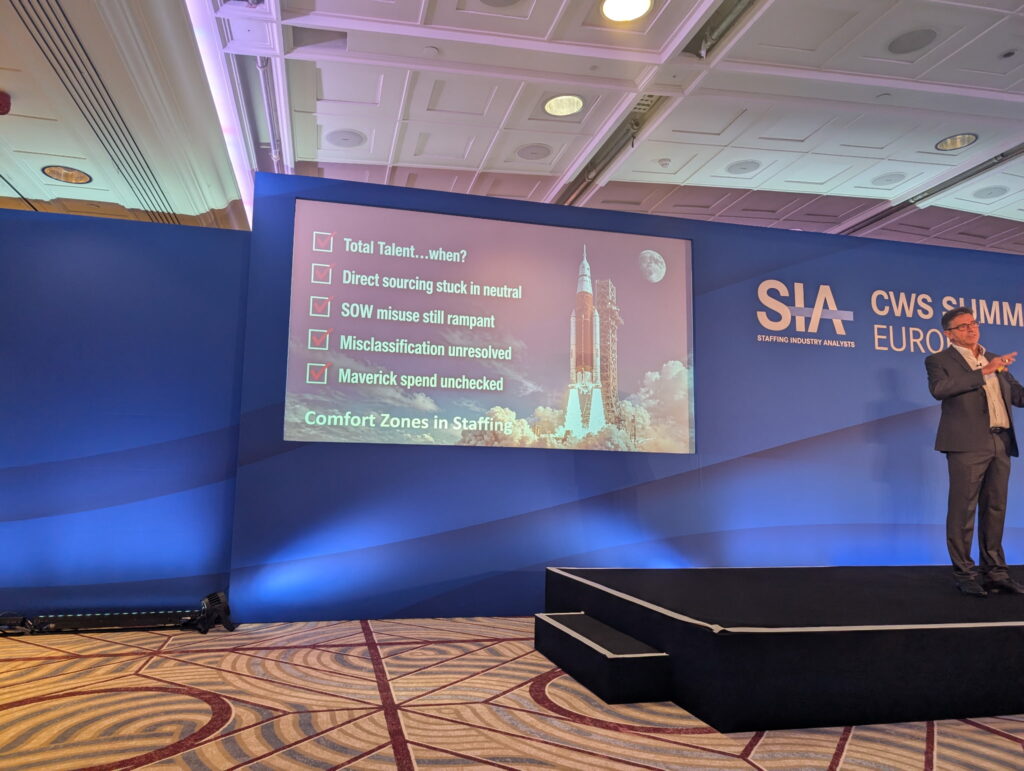
Our team will be exploring this in more detail at CWS Summit Europe 2026 on 19 and 20 May. If this reflects challenges in your own programme, the Morson Edge team works with CPOs, CHROs and programme leaders to audit, extend and strengthen MSP scope.
Contact me at Sam.Menelaou@morson.com to continue the conversation or browse our website.



 English
  French